How much does surround sound installation cost in San Antonio?
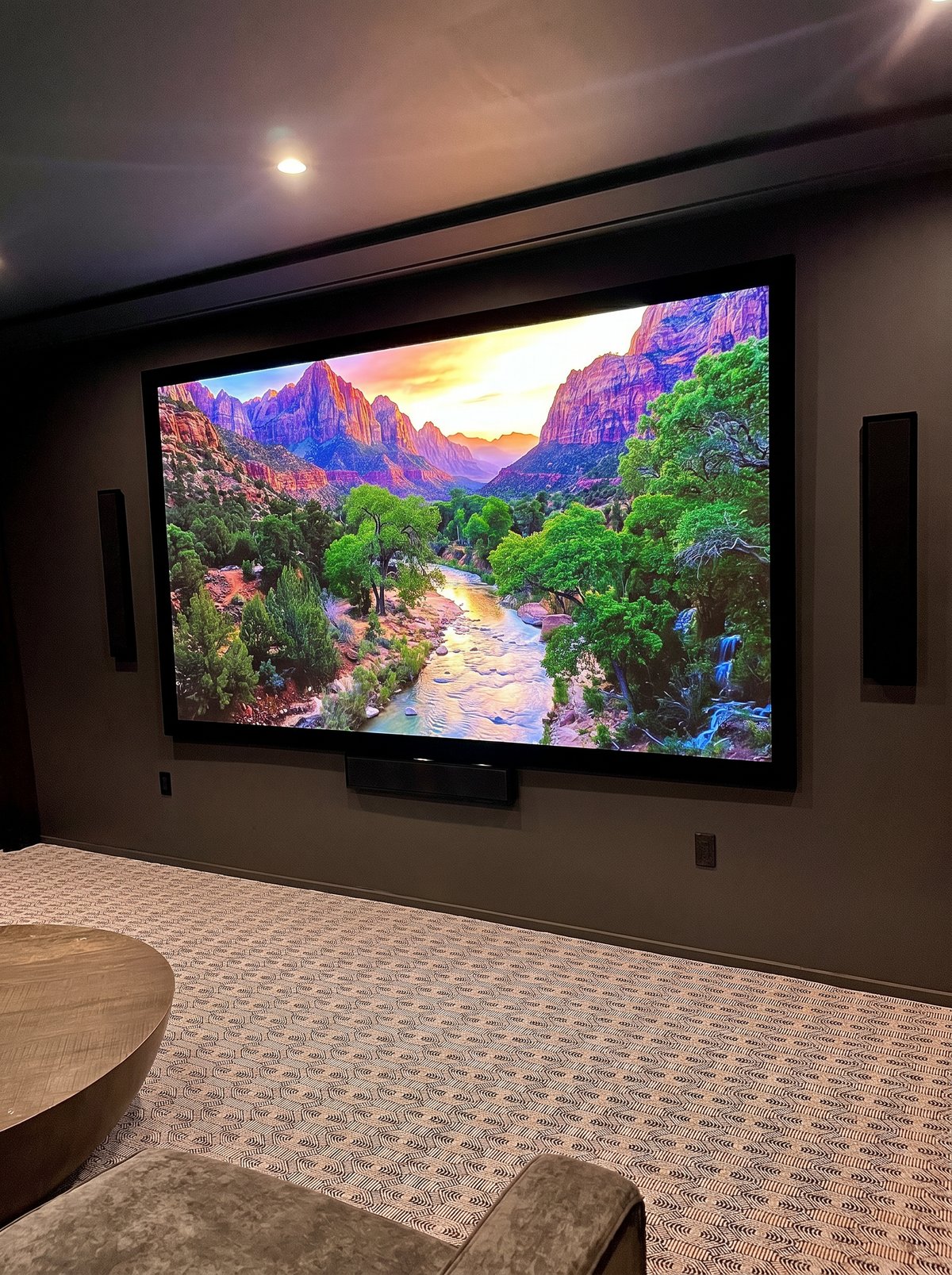
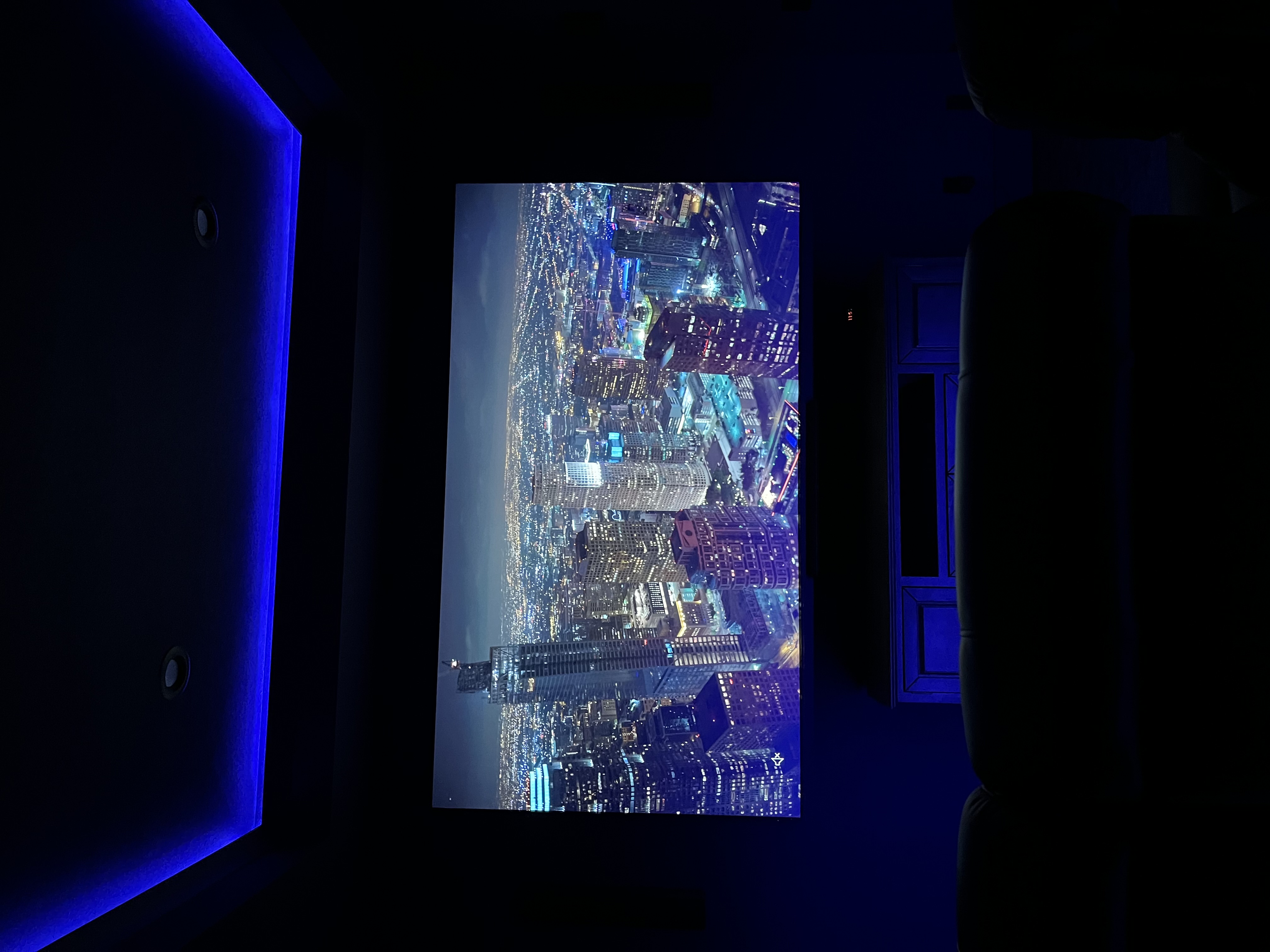
Surround sound in San Antonio typically costs $3,000 to $5,000 for a 5.1 or 7.1 system (speakers, subwoofer, and AV receiver, added to a TV or projector you already have). A premium soundbar with a wireless subwoofer is a cheaper option at $800 to $2,000 installed. A true 5.1 system, three front speakers, two surrounds, and a subwoofer with an AV receiver, runs around $3,000 installed, and a 7.1 system runs up toward $5,000. Adding Dolby Atmos brings it to $6,000 to $7,000, because Atmos puts one or two pairs of height speakers in the ceiling, each with its own wire run and install, and it needs an Atmos-capable receiver. A reference 9.2.4 Atmos system is part of a dedicated theater build rather than a standalone surround add-on. Cost depends on speaker brand, whether speakers are in-wall or in-ceiling versus bookshelf, receiver capability, and the labor to fish wire through finished walls. KZ Audio & Video designs the system around your room and gives a written quote after a free in-home visit.
Is a soundbar or a full surround sound system better for the money?
It depends on the room and how you use it. A premium soundbar with a wireless subwoofer ($800 to $2,000 installed) is the right call for a bedroom, office, or a living room where clean looks matter more than immersion, modern soundbars sound genuinely good and hide easily. A full 5.1 or 7.1 surround system ($3,000 to $5,000) is worth it for a dedicated media room or a great room where you watch movies and sports seriously, because real speakers placed around the room create immersion a single bar cannot match. For most San Antonio living rooms, we honestly recommend a quality soundbar unless you want true cinema sound. We tell you which makes sense for your space rather than upselling speakers you will not appreciate.
What is the cost difference between 5.1, 7.1, and Dolby Atmos?
The jump comes from speaker count and the receiver needed to drive them. A 5.1 system, three fronts, two surrounds, one subwoofer, runs around $3,000 installed. A 7.1 system adds two more surround speakers and runs about $3,500 to $5,000. Dolby Atmos adds overhead sound: a 5.1.2 or 7.1.4 layout puts one or two pairs of speakers in the ceiling for height effects, each with its own wire run, and it needs an Atmos-capable receiver, so an Atmos system runs $6,000 to $7,000. A reference 9.2.4 Atmos system belongs to a dedicated theater build, not a standalone surround add-on. More channels mean more immersion but also more equipment, wiring, and calibration. For a dedicated theater we usually recommend Atmos; for a living room, a clean 5.1 often makes more practical sense.
How much more do in-wall and in-ceiling speakers cost than bookshelf speakers?
In-wall and in-ceiling speakers themselves cost roughly the same as comparable bookshelf models, but the installation labor is higher because we cut into the wall or ceiling, run wire through framing, and finish the openings cleanly. That labor is already built into the $3,000 to $5,000 range: an in-wall or in-ceiling build simply lands you toward the top of it rather than the bottom. The payoff is a clean, built-in look with no speaker boxes or visible wires, which matters in a finished living space. In an existing finished room the wire has to be fished through closed walls, so retrofits sit higher than new construction. We assess the room and tell you exactly what is involved.
Do I need a new AV receiver, and how much does one cost?
If your current receiver supports the number of channels and the features you want, you can keep it and save money. You need a new receiver when you are stepping up channels (for example, moving from 5.1 to 7.1 or adding Dolby Atmos height channels), when your receiver lacks 4K or HDMI passthrough for a new TV, or when it cannot decode current audio formats. A capable mid-range AV receiver runs about $600 to $1,200, and it is already included in the $3,000 to $5,000 system price. A high-end receiver or separate processor and amplifier is a dedicated-theater item. The receiver is the brain of the system, so we match it to your speakers and sources rather than overspending. We will tell you honestly whether your existing receiver is worth keeping.
How much does it cost to add surround sound to an existing living room?
Adding surround sound to an existing San Antonio living room typically costs $3,000 to $5,000, depending on the system and the wiring. The biggest variable is whether speakers go in bookshelf or floor-standing positions (lower labor) or in-wall and in-ceiling (higher labor, cleaner look). In a finished room, wire has to be fished through closed walls and ceilings, which adds labor compared to new construction. A clean 5.1 system with a receiver, hidden wiring, and a subwoofer usually lands around $3,000, a 7.1 system runs toward $5,000, and adding Atmos height channels brings it to $6,000 to $7,000 because of the extra ceiling speakers and in-ceiling wiring. We do this retrofit work constantly across San Antonio, the drywall impact is minimal, and we assess your specific room before quoting so there are no surprises.
Why does professional surround sound installation cost more than DIY?
The equipment is only part of a surround system: the performance comes from correct speaker placement, level matching, and calibration, which is what professional installation buys you. We position each speaker for your specific room dimensions and seating, run and conceal the wiring cleanly, configure the receiver, and calibrate levels and distances so dialogue is clear and effects are balanced. A DIY setup with speakers in the wrong spots and a receiver left on defaults often sounds worse than a cheaper system installed correctly. Professional installation also means no visible wires, proper in-wall work, and a system that actually integrates with your TV and sources. For a soundbar, DIY is reasonable. For a true surround system you want to enjoy for years, the calibration and clean install are where the value is.
Does adding a second subwoofer improve sound, and what does it cost?
Yes, dual subwoofers are one of the best upgrades in surround sound, and most people underestimate the difference. Two subwoofers placed correctly smooth out bass across the whole room so every seat gets even, tight low end instead of one boomy spot and one weak spot. Adding a second subwoofer brings a system toward the top of the $3,000 to $5,000 range, and it is one of the highest-value upgrades you can make. In a dedicated theater we almost always recommend two subs; in a living room it depends on room size and how much you care about bass. The benefit is consistency and impact, not just volume. We measure the room and place the subs where they actually perform, rather than just tucking them in a corner.