

KZ Audio & Video · San Antonio · Since 1999
Is Dolby Atmos Worth It?
- Since 1999
- In the Audio Business
- Free Consult
- No Pressure, No Pitch
- Clean Install
- We Leave It Like We Found It
- 5.0 Stars
- 34 Google Reviews
Quick Answer
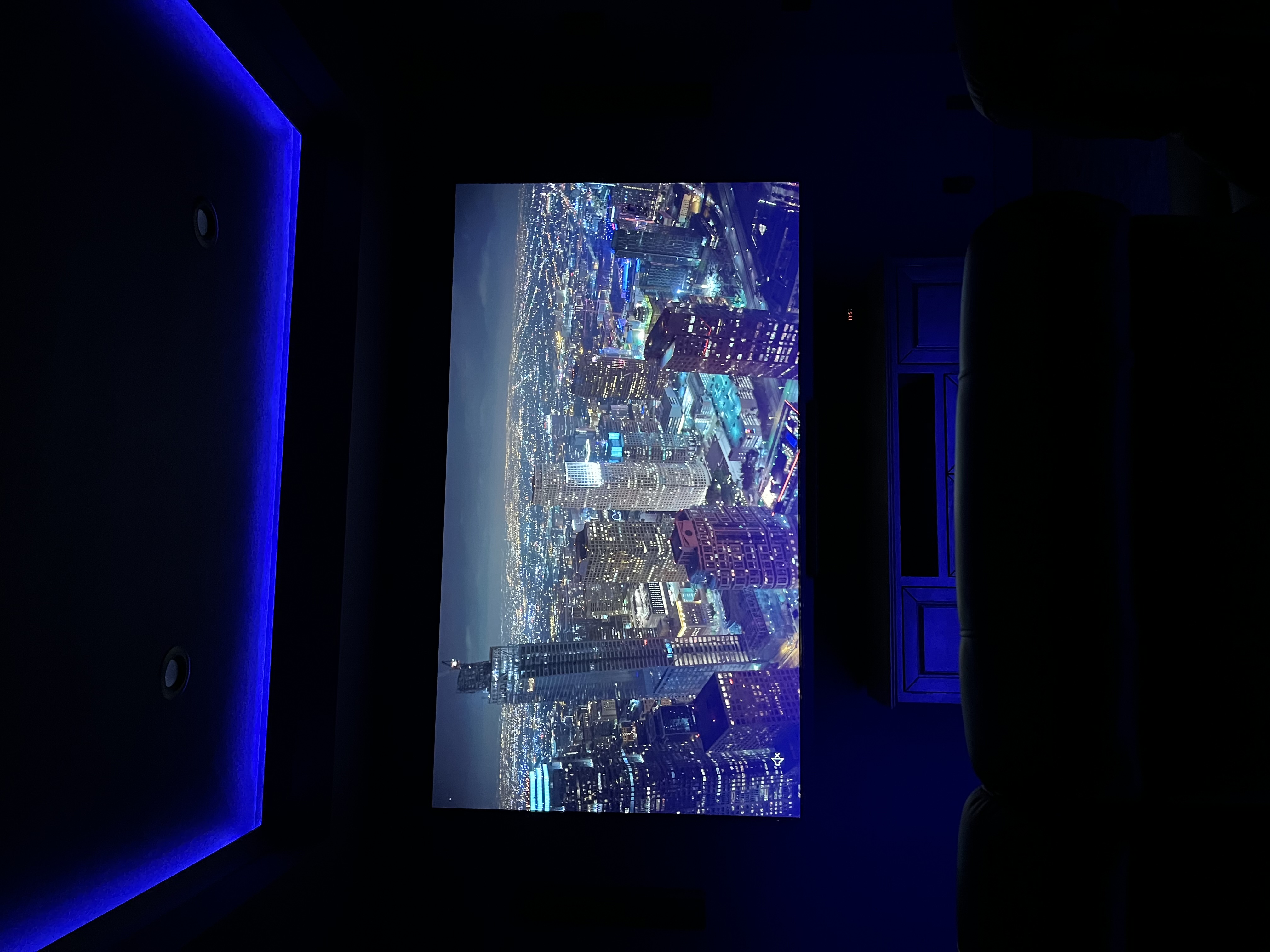
Dolby Atmos is worth it if you have in-ceiling speaker access and are building or upgrading a dedicated theater or serious media room. The overhead sound layer: helicopters passing above, rain falling around you, a ball bouncing across a stadium ceiling, is a genuinely different experience from a flat 5.1 or 7.1 system. It is not marketing. However, Atmos requires in-ceiling speakers, an Atmos-capable AV receiver, and Atmos-encoded content (Netflix 4K, Apple TV+, Blu-ray). If you cannot run ceiling speakers, upward-firing Atmos modules on your front speakers are a compromise, better than nothing, but not the real effect. If you are working with a soundbar, the simulated Atmos effect from upward-firing drivers is the weakest implementation. For a living room with a standard 8-foot ceiling and existing 5.1 wiring, upgrading the existing system often delivers more value than adding Atmos. For a dedicated theater build starting from scratch, spec it Atmos from day one, the in-ceiling wiring cost during construction is minimal.
Written by Kelly Zauber · KZ Audio & Video · San Antonio, TX · (210) 981-4098
What Dolby Atmos Actually Does
Standard 5.1 and 7.1 surround sound places audio in a horizontal plane around you. Dolby Atmos adds a vertical dimension, overhead channels that let mixers place sound above and around you in three-dimensional space. The result is a hemisphere of sound rather than a circle. On well-mixed Atmos content (most major studio releases on streaming and Blu-ray), the effect is immediately noticeable and not subtle.
When Atmos Is Worth the Investment
- Dedicated home theater, new construction: Adding four in-ceiling Atmos speakers during construction costs $800–$2,000 in wiring and speaker labor. This is the minimum cost delta between a 7.1 and a 7.1.4 Atmos system. At this price point, it is almost always worth doing.
- Dedicated theater, existing room with accessible attic: Routing in-ceiling speaker wire through an accessible attic is feasible at $1,500–$3,500 depending on the room. Worth it if you plan to use the theater seriously.
- Existing media room where ceiling access is possible: Same answer. The overhead channels are the most noticeable single upgrade in an existing surround system.
When Atmos Is Not Worth It
- No ceiling access: Finished ceilings with no attic access and concrete above make in-ceiling wiring extremely expensive or impossible. Upward-firing modules are a compromise; simulated Atmos from a soundbar is a marketing claim more than an experience.
- Vaulted or cathedral ceilings: Atmos height speakers work best in flat or gently sloped ceilings. Very steep vault angles make speaker positioning difficult and reduce the overhead effect.
- Budget under $4,000 for the full system: At lower budgets, money spent on better front speakers and a quality receiver delivers more audible improvement than adding Atmos channels.
- Casual living room viewer: If your primary content is network TV, sports, and background music, Atmos content is less common in those formats and the upgrade delivers less return.
Atmos Receiver Requirements
You need an AV receiver with Dolby Atmos decoding and enough amplifier channels. A 7.1.4 layout (7 surrounds + 4 height speakers) requires an 11-channel receiver. Capable mid-range Atmos receivers (Denon AVR-X3800H, Marantz Cinema 70s, Yamaha RX-A4A) run $900–$1,500. A reference-grade Atmos processor plus separate amplification runs $3,000–$10,000+.
Atmos Content Availability
Dolby Atmos is now widely available: Netflix 4K, Apple TV+ (nearly all originals), Disney+, HBO Max, Amazon Prime Video, and most major 4K Blu-ray releases. Standard HD streaming does not carry Atmos. You need 4K streaming or physical media. Most theatrically released films from major studios in the last eight years have an Atmos mix.
The Speaker Layout Options Ranked
| Implementation | Quality | Cost Delta vs 7.1 |
|---|---|---|
| In-ceiling dedicated Atmos speakers | Best: full 3D effect | $1,500–$4,000 |
| Upward-firing add-on modules | Good, noticeable improvement | $600–$1,800 |
| Upward-firing soundbar (Arc, etc.) | Simulated, modest effect | $800–$1,500 |
Pro Tip: From 25+ Years of Installs
In-ceiling Atmos speakers should be placed at roughly 45° in front of and behind the primary listening position, not directly overhead. Speakers directly above your head localize sound to your scalp rather than creating an overhead soundstage. We see this mistake constantly in DIY Atmos installs. Dolby's recommended placement charts are specific about the angle for a reason.
San Antonio & Hill Country Context
Texas Hill Country homes frequently have coffered ceilings and accessible attic space above finished living areas, ideal conditions for running Atmos wiring. We routinely add Atmos to existing dedicated theaters in Boerne and Stone Oak homes where the attic is accessible. If you are building new in San Antonio's custom home corridors, the conversation about Atmos happens at framing, not after drywall.
KZ Audio & Video installs throughout San Antonio, Stone Oak, Boerne, Helotes, Canyon Lake, New Braunfels, and the Texas Hill Country. Book a free consultation →
Explore KZ Services & Pricing
Need a Real Answer for Your Room?
Every room is different. Kelly has been solving AV problems in San Antonio homes since 1999. Free in-home consultation: we come to you, assess the space, and give you a written quote.
Serving San Antonio · Boerne · Canyon Lake · New Braunfels · Hill Country