

KZ Audio & Video · San Antonio · Since 1999
Projector vs TV: Which Is Better for a Home Theater?
- Since 1999
- In the Audio Business
- Free Consult
- No Pressure, No Pitch
- Clean Install
- We Leave It Like We Found It
- 5.0 Stars
- 34 Google Reviews
Quick Answer
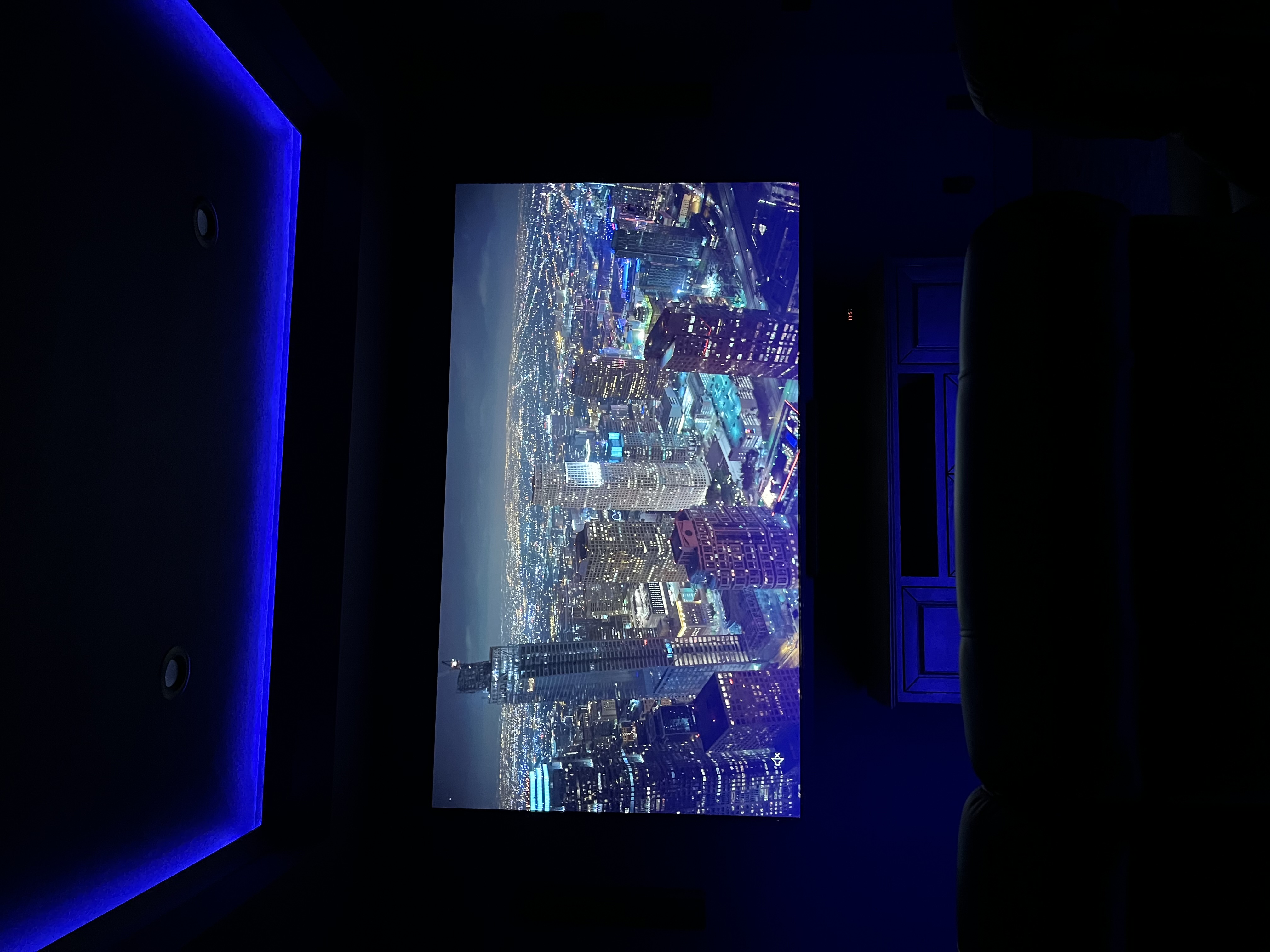
A projector is the right choice for a dedicated dark room where you want a 100"+ image at lower cost per screen inch than a large TV. A TV is the right choice for bright rooms, casual living spaces, and anyone who wants simplicity over screen size. The key numbers: a quality 4K laser projector with a 120" screen runs $5,000–$12,000 installed. A 120" equivalent TV does not exist: the largest production TVs are 98", and they cost $5,000–$25,000 with inferior brightness in dark rooms. For a dedicated home theater with light control, a projector gives you more screen per dollar above 100". For a living room, media room, or any space with ambient light, a TV wins on brightness, contrast, simplicity, and reliability. The main projector tradeoffs: requires a dark or darkened room, bulbs need replacement every 2,000–5,000 hours (laser projectors eliminate this), and setup is more complex than mounting a TV.
Written by Kelly Zauber · KZ Audio & Video · San Antonio, TX · (210) 981-4098
The Core Tradeoff
Projector wins: Screen size above 100" at reasonable cost. Cinematic experience in a controlled light environment. The only way to get 120–200" screen size.
TV wins: Works in any room lighting. Simpler setup. Better contrast (especially OLED). No bulbs, no alignment, no screen. Turn on and watch.
Room Lighting: The Deciding Factor
Projectors work by bouncing light off a screen. Ambient room light competes with the projected image. In a room you can darken (blackout shades, no windows, or watching only at night), a projector is excellent. In a room with windows, natural light, or daytime viewing requirements, the image washes out, even with a bright laser projector.
- Dedicated dark theater with light control: Projector, no question
- Basement media room with small windows: Projector works well, especially with blackout shades
- Living room with large windows: TV, even a 2,500 nit laser projector struggles against afternoon sun
- Mixed-use great room: TV, the flexibility and usability advantage is significant
Screen Size and Cost Comparison
| Screen Size | Projector System Cost | TV Cost (if available) |
|---|---|---|
| 85" | $2,500–$6,000 | $1,800–$6,000 |
| 100" | $3,500–$10,000 | $4,000–$15,000 (rare models) |
| 120" | $4,500–$15,000 | Not available |
| 150" | $6,000–$20,000 | Not available |
Above 100", a projector is the only option and is significantly less expensive than TV alternatives at comparable screen sizes.
Lamp vs Laser Projectors
Lamp projectors: Lower upfront cost ($1,000–$4,000). Lamps degrade over 2,000–5,000 hours and cost $200–$500 to replace. Color shifts as the lamp ages. Fine for casual use and budget builds.
Laser projectors: Higher upfront cost ($2,500–$15,000+). Light source rated 20,000+ hours, effectively the life of the unit. Instant on/off. More consistent color over time. Better for serious installations where a lamp swap is an inconvenience.
For any permanent home theater installation, we recommend laser. The lamp savings over 5–10 years of use do not justify the maintenance and degradation tradeoff.
Throw Distance: Room Size Requirements
Standard throw projectors need 10–14 feet of throw distance for a 100–120" image. Short throw projectors need 3–6 feet. Ultra-short throw (UST) projectors sit 6–24 inches from the screen. UST projectors are ideal for rooms where you cannot push the projector far back, they mount on a low cabinet below or near the screen.
When to Seriously Consider a Micro LED Wall Instead
For premium installs, a micro LED wall (108"–200"+) offers projector-scale screen size with TV-level brightness and contrast: no dark room required, no bulbs, infinite contrast, works in full sunlight. Cost starts at $28,000–$50,000 for a 108" system. For the right client, it eliminates both the projector's light requirement and the TV's size limitation.
Pro Tip: From 25+ Years of Installs
The most underestimated projector factor is screen gain and ambient light rejection. A standard matte white screen (1.0 gain) reflects light equally in all directions, ambient room light bounces off it the same way the projected image does. A gray ALR (Ambient Light Rejection) screen with a gain of 0.8–1.3 uses a specialized surface to preferentially reflect light from the projector while rejecting room light. In a room with moderate ambient light, an ALR screen can salvage a projector installation that a standard screen would make unwatchable. Budget for the screen as a primary component, not an afterthought.
San Antonio & Hill Country Context
San Antonio's Hill Country custom homes are often designed with open sight lines and natural light as a primary feature, beautiful architecture that creates challenging conditions for projectors. We frequently spec laser projectors paired with ALR screens in rooms that have ambient light, or recommend micro LED walls for clients who want projector-scale size without any light management. For dedicated theater rooms, increasingly common in Boerne and Stone Oak custom builds, projector systems remain the right answer.
KZ Audio & Video installs throughout San Antonio, Stone Oak, Boerne, Helotes, Canyon Lake, New Braunfels, and the Texas Hill Country. Book a free consultation →
Explore KZ Services & Pricing
Need a Real Answer for Your Room?
Every room is different. Kelly has been solving AV problems in San Antonio homes since 1999. Free in-home consultation: we come to you, assess the space, and give you a written quote.
Serving San Antonio · Boerne · Canyon Lake · New Braunfels · Hill Country